DERMATOLOGY
STEVEN JOHNSON SYNDROME (<10% BSA) + TOXIC EPIDERMAL NECROLYSIS (>30% BSA)
Prompt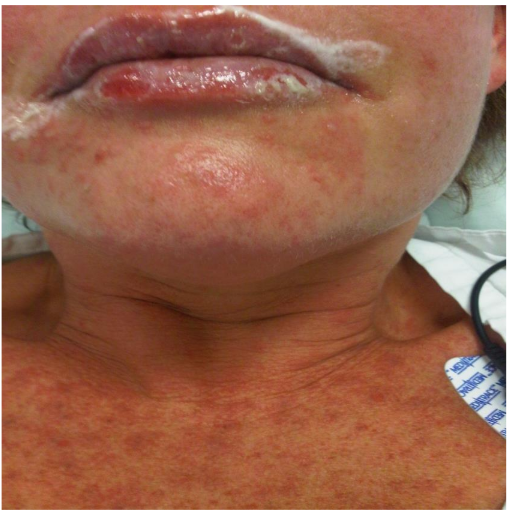
Response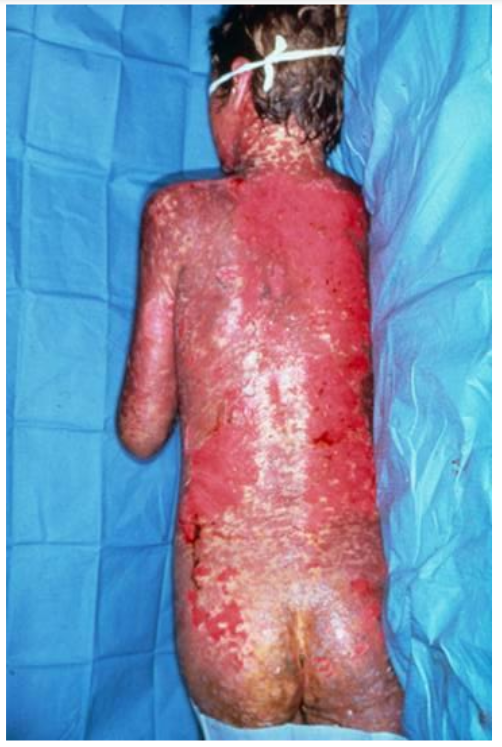
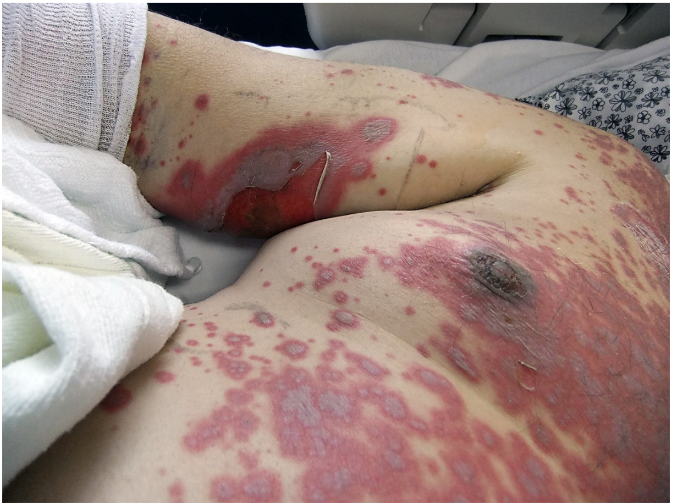
PromptImage descriptions
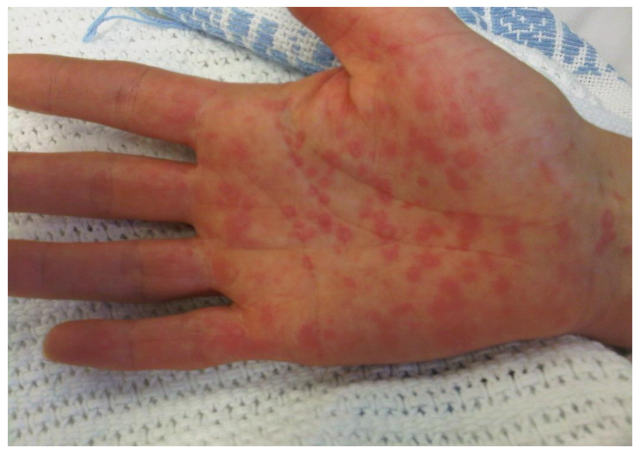
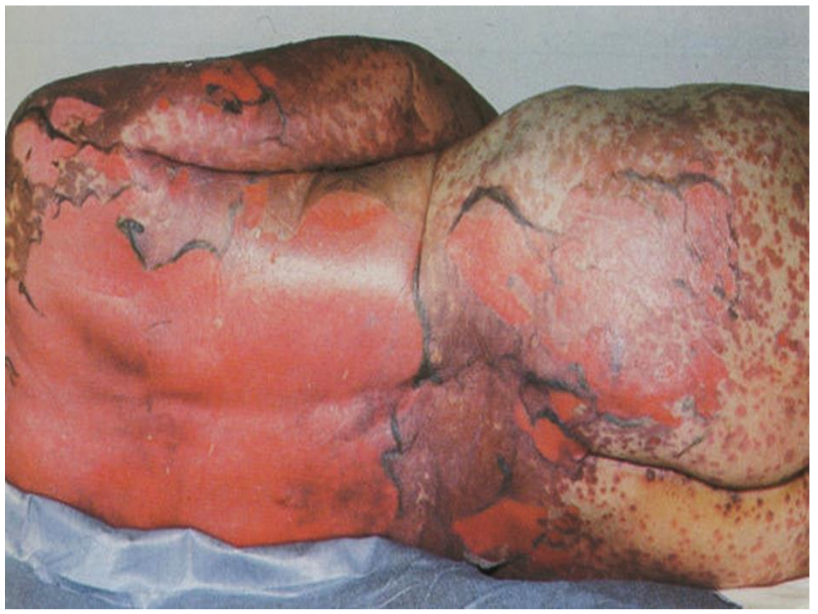
ResponseWidespread erythematous rash with bulous detachment of epidermis
Macular rash to _____ (area), discreet lesions of different sizes
Areas of confluence
Scalded skin appearance
Epidermal loss with blistering
Affects _____% body surface area
Involvement of mucosal surfaces
Macular rash to _____ (area), discreet lesions of different sizes
Areas of confluence
Scalded skin appearance
Epidermal loss with blistering
Affects _____% body surface area
Involvement of mucosal surfaces
PromptDifferential for this rash
ResponseSJS/TEN (Probably one ddx - i’d probably put a caveat like “depending on %BSA)
Staphylococcal scalded skin syndrome/Toxic shock syndrome (no mucosal involvement)
Erythematous drug reaction, parneoplastic
Pemphigus/pemphigoid (eg: Lymphoma)
Erythema multiforme (HSV)
Erythoderma (normal mucosal involvement)
Disseminated viral infection - HSV/Parvovirus
DRESS (Drug rash with eosinophilia and systemic symptoms (DRESS) syndrome is a distinct, severe, idiosyncratic reaction to a drug)
ACute generalised exanthematous ppustulosis
Kawasaki disease in child (Especially SJS)
syphilis
Staphylococcal scalded skin syndrome/Toxic shock syndrome (no mucosal involvement)
Erythematous drug reaction, parneoplastic
Pemphigus/pemphigoid (eg: Lymphoma)
Erythema multiforme (HSV)
Erythoderma (normal mucosal involvement)
Disseminated viral infection - HSV/Parvovirus
DRESS (Drug rash with eosinophilia and systemic symptoms (DRESS) syndrome is a distinct, severe, idiosyncratic reaction to a drug)
ACute generalised exanthematous ppustulosis
Kawasaki disease in child (Especially SJS)
syphilis
PromptCommon causes for SJS/TEN
ResponseMedications (A’s and Anti’s)
Allopurinol
Anticonvulsants - carbamazepine, lamotrigine, phenytoin, phenobarbitone
Antibiotics - sulfonamide, beta lactams (penicillin/cefalosporins)
Analgesics - paracetamol, NSAIDS (mostly ending in ___oxycam)
Antacids - omeprazole
Non medication
Infections
Mycoplasma pneumoniae
CMV
MIDI - Malignancy (Carcinoid/lymphoma), Infections, Drugs, Idiopathic
Allopurinol
Anticonvulsants - carbamazepine, lamotrigine, phenytoin, phenobarbitone
Antibiotics - sulfonamide, beta lactams (penicillin/cefalosporins)
Analgesics - paracetamol, NSAIDS (mostly ending in ___oxycam)
Antacids - omeprazole
Non medication
Infections
Mycoplasma pneumoniae
CMV
MIDI - Malignancy (Carcinoid/lymphoma), Infections, Drugs, Idiopathic
PromptRisk factors for SJS/TEN
ResponseHIV/AIDS
SLE
Malignancies - Lukaemia, lymphoma
SLE
Malignancies - Lukaemia, lymphoma
PromptSJS vs TEN differences
ResponseSJS <10% body BSA
TEN >30% BSA
SJS/TEN overlap between 10-30%
TEN >30% BSA
SJS/TEN overlap between 10-30%
PromptExamination findings in SJS
ResponseInvolvement of mucosal surfaces
Marked pain
Nicholsky sign positive
Degree of BSA <10% (in SJS)
Marked pain
Nicholsky sign positive
Degree of BSA <10% (in SJS)
PromptNicholsky sign
ResponseEpidermis detaches from the dermis/burn bed with slight friction or rubbing of the skin with a finger
PromptManagement of SJS/TEN
ResponseSupportive care
IVIG or Steroids = Controversial
- Wound care
- fluid/electrolyte replacement
- Analgesia
- Topical antiseptics
- Surveillance cultures
- Monitor and suspect superinfection
IVIG or Steroids = Controversial
PromptComplications of SJS/TENS
ResponseFluids: Massive fluid loss through denuded skin, electrolyte imbalance, hypovolemic shock with renal failure,
Infection: Bacteraemia. Sepsis + Septic shock with multi organ failure (S. Aureus and P. Aeruginosa)
Resp: pneumonia, interstitial pneumonitis, ARDS
GIT: Ulceration/perforation,.epithelial necrosis of esophagus, small bowel or colon
Impaired thermal regularino and temperature maintenance
Pain
Occular involvement
Infection: Bacteraemia. Sepsis + Septic shock with multi organ failure (S. Aureus and P. Aeruginosa)
Resp: pneumonia, interstitial pneumonitis, ARDS
GIT: Ulceration/perforation,.epithelial necrosis of esophagus, small bowel or colon
Impaired thermal regularino and temperature maintenance
Pain
Occular involvement