ORTHOPAEDICS - PAEDIATRICS
SUPRACONDYLAR HUMERAL FRACTURE
Expect to get asked ossification centres
PromptClassification of SCH#’s
(image - google)
(image - google)
Response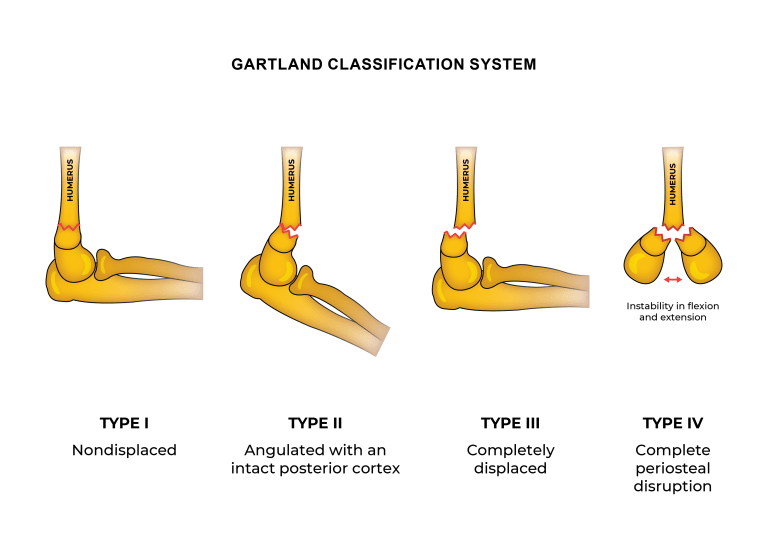
Type 1 - Undisplaced
Type 1 - Undisplaced
- No posterior displacement of capitellum from anterior humeral line
- No reduction required, managed as outpatient in long arm backslab
- Anterior humeral line is anterior to middle ⅓ of capitellum - ed; Posterior cortex intact
- Need reduction in ED and immobilisation in long arm backslab 90 degrees
- Home if no concern for NV injury or compartment syndrome
- Significant posterior displacment of capitellum with no cortical constc
- Need referral for urgent ORIF
PromptRadiologic features of SCH#
ResponseSupracondylar lucency suggesting fracture line
Cortical breach on anterior surface over lower humerus on lateral view
Anterior humeral line that does not bisect the capitellum on the lateral view
Change in physeal line of lateral condyle of humerus, and a line perpendicular to the long axis of the humeral shaft (Bauman’s angle)
Anterior fat pad
Posterior fat pad
Cortical breach on anterior surface over lower humerus on lateral view
Anterior humeral line that does not bisect the capitellum on the lateral view
Change in physeal line of lateral condyle of humerus, and a line perpendicular to the long axis of the humeral shaft (Bauman’s angle)
Anterior fat pad
Posterior fat pad
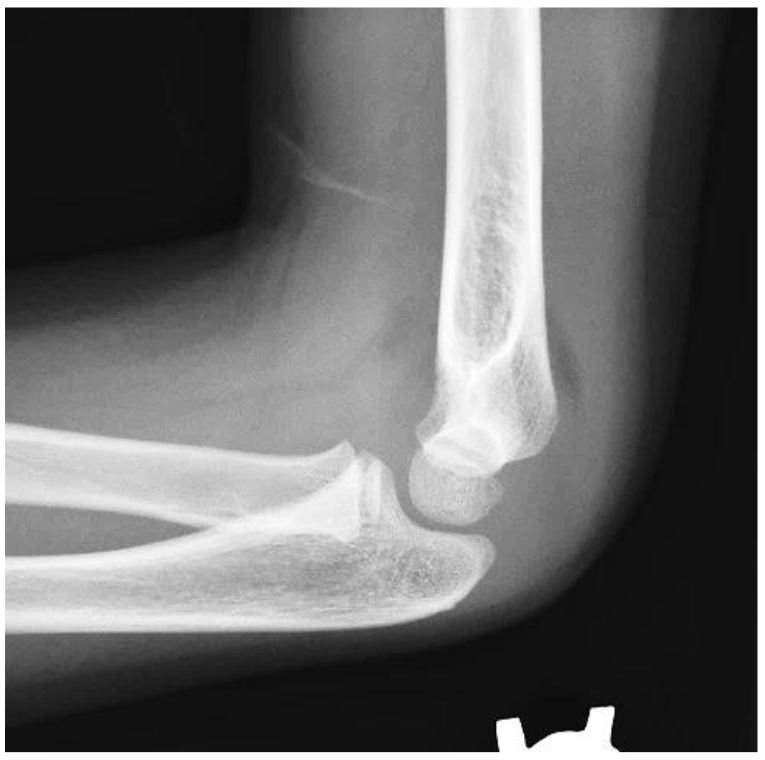
PromptGartland 1
Response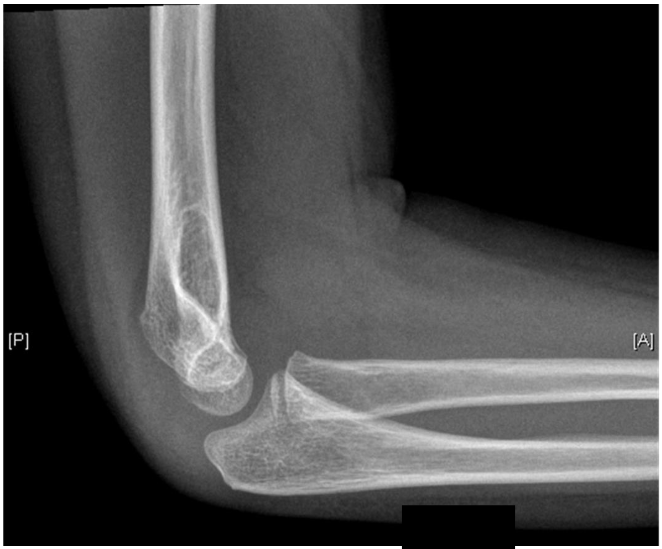
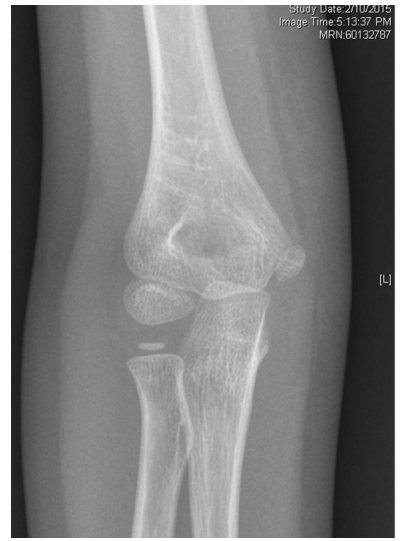
Fracture line anterior cortex supracondylar part of humerus
Distended anterior fat pad (Sail sign)
Distension of posterior fat pad
Cortical disruption over the posterior humeral surface at level of olecranon fossa on lateral film
No varus or valgus deformity
Management:
Analgesia
Sling or long arm plaster (both acceptable)
Orthopaedic follow up
Fracture line anterior cortex supracondylar part of humerus
Distended anterior fat pad (Sail sign)
Distension of posterior fat pad
Cortical disruption over the posterior humeral surface at level of olecranon fossa on lateral film
No varus or valgus deformity
Management:
Analgesia
Sling or long arm plaster (both acceptable)
Orthopaedic follow up
PromptGardland 2
Response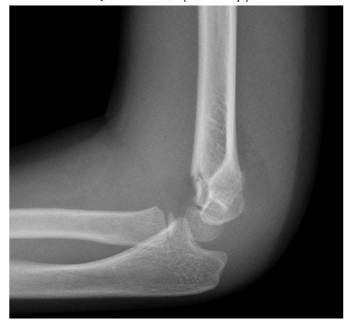
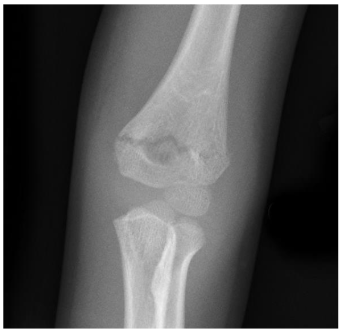
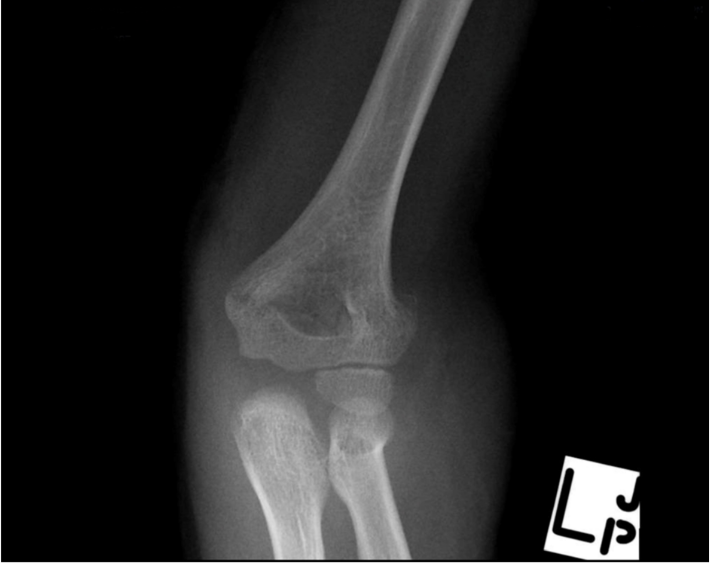
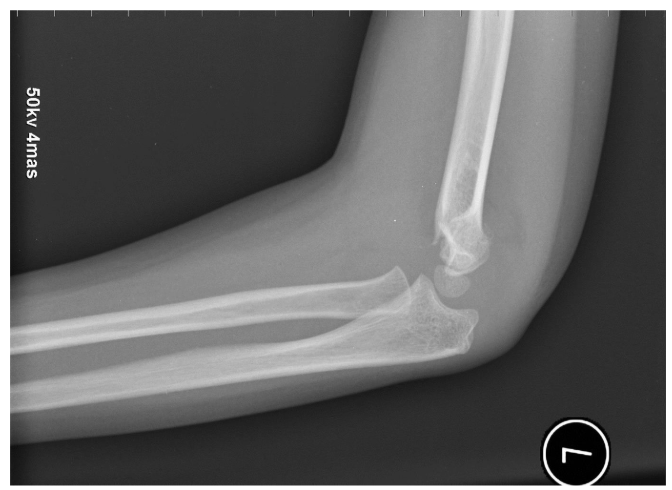
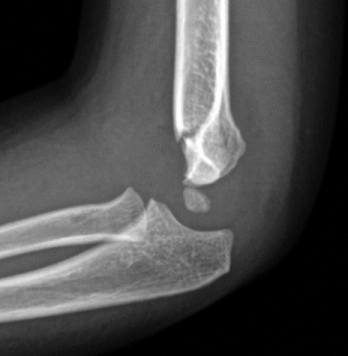
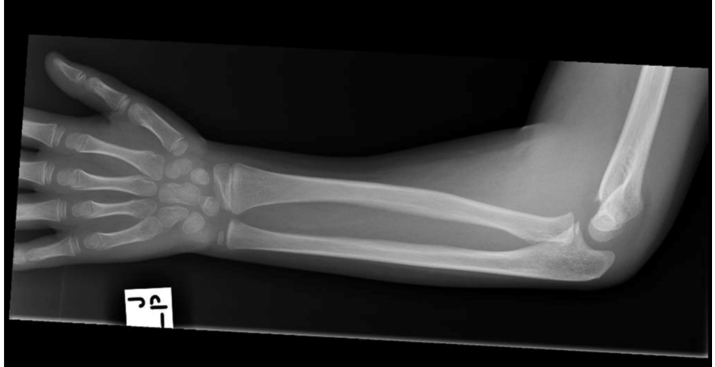
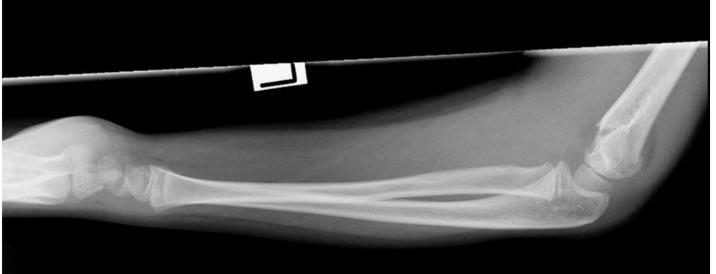
Displacement of anterior humeral line/fracture site visible.
Posterior displacement with intact posterior cortex
Dorsal angulation of distal fragment
Anterior fat pad - Sail sign, Posterior fat pad
“Associated haemarthrosis”
Management
Backslab
Analgesia
Urgent orthopaedic review
Displacement of anterior humeral line/fracture site visible.
Posterior displacement with intact posterior cortex
Dorsal angulation of distal fragment
Anterior fat pad - Sail sign, Posterior fat pad
“Associated haemarthrosis”
Management
Backslab
Analgesia
Urgent orthopaedic review
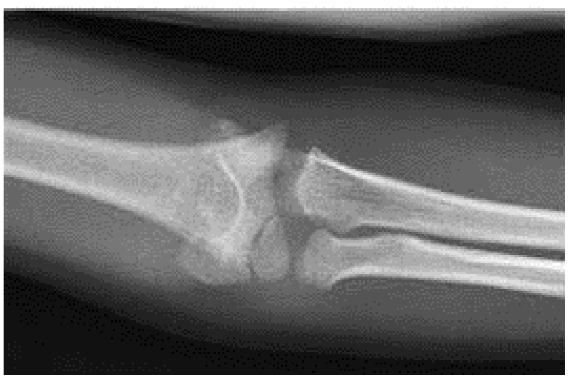
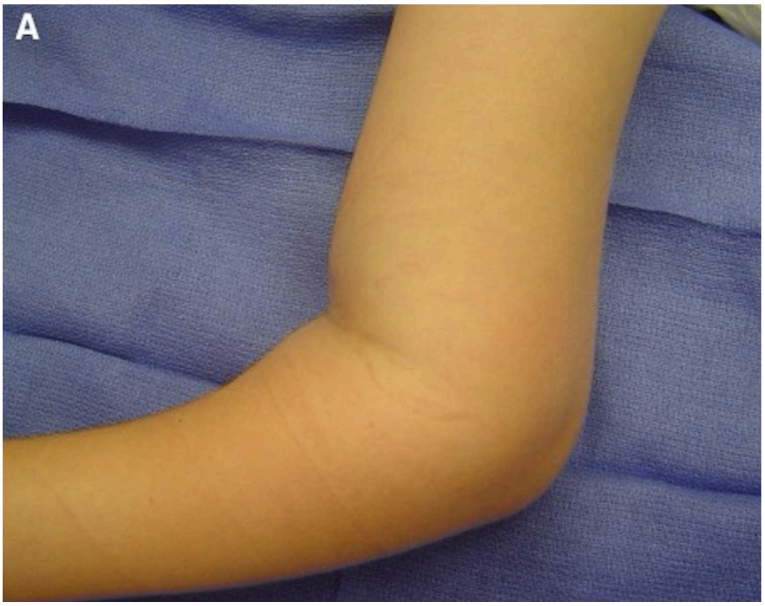
PromptGartland 3
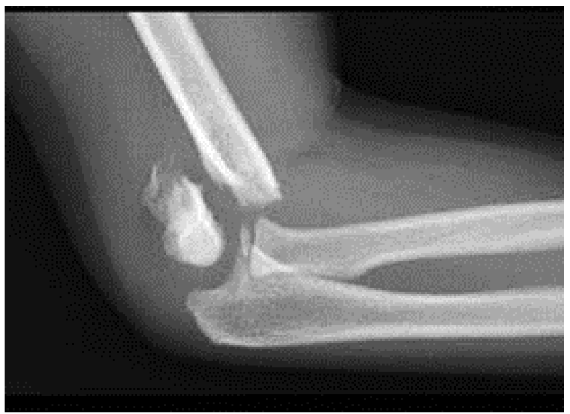
ResponseMost likely diagnosis: Supracondylar fracture
Closed
Grade III (or high grade)
Management
Long arm backslab
Orthopaedic referral for operative management
Closed
Grade III (or high grade)
Management
Long arm backslab
Orthopaedic referral for operative management
PromptComplications of SCH#
ResponseNervous
AIN (median) - No OK sign >>Radial - wrist drop
Ulnar nerve with flexion type injuries - inability to abduct fingers
(usually resolves on reduction)
Vascular (5-17%)
Brachial artery compromise/damage
Radial artery transection - loss of radial pulse
Compartment syndrome
Other
Volkmann’s ischaemic contracturs (12-24h)
Long term
Cubitus varus or valgus (Gunstock deformity)
Myositis ossificatns
AIN (median) - No OK sign >>Radial - wrist drop
Ulnar nerve with flexion type injuries - inability to abduct fingers
(usually resolves on reduction)
Vascular (5-17%)
Brachial artery compromise/damage
Radial artery transection - loss of radial pulse
Compartment syndrome
Other
Volkmann’s ischaemic contracturs (12-24h)
Long term
Cubitus varus or valgus (Gunstock deformity)
Myositis ossificatns
PromptIndications for operative reduction for SCH#
ResponseAny reduction in pulse volume/Distal ischaemia
Skin compromise from fracture or open injury
Nerve compromise
Dorsal angulation >15 degrees
Any Varus or valgus deformity >10 degrees (Normal carrying angle 10 degrees)
Displacement with <50% bony apposition in any direction
Any rotational deformity
Skin compromise from fracture or open injury
Nerve compromise
Dorsal angulation >15 degrees
Any Varus or valgus deformity >10 degrees (Normal carrying angle 10 degrees)
Displacement with <50% bony apposition in any direction
Any rotational deformity
PromptReduction technique in ED
ResponseProcedural sedation - ketamine 1-2mg/kg IV
Reduction
Reduction
- Reduce by anterior push on distal fragment
- Feel for return of radial pulse
- Above elbow backslab at 90 degrees
PromptDischarge advice for SCH fracture
ResponsePlaster care advice
Follow up arranged
Analgesia - simple
Elevate limb
Indications for return to ED - Pain, swelling, colour change, pins + Needles, backslab dammaged/loose/too tight
Follow up arranged
Analgesia - simple
Elevate limb
Indications for return to ED - Pain, swelling, colour change, pins + Needles, backslab dammaged/loose/too tight