ENT
EPIGLOTTITIS
Prompt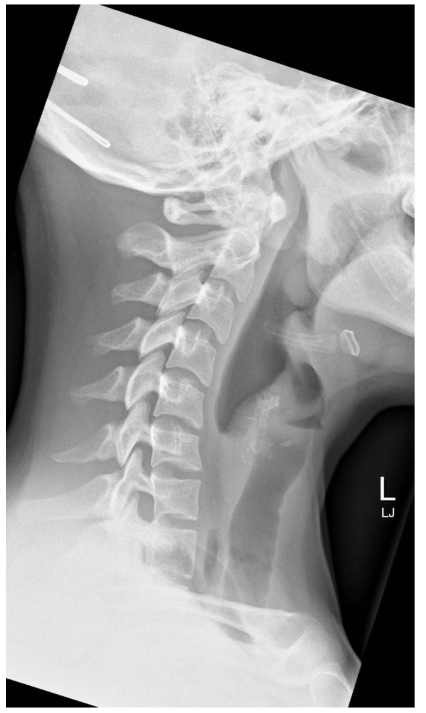
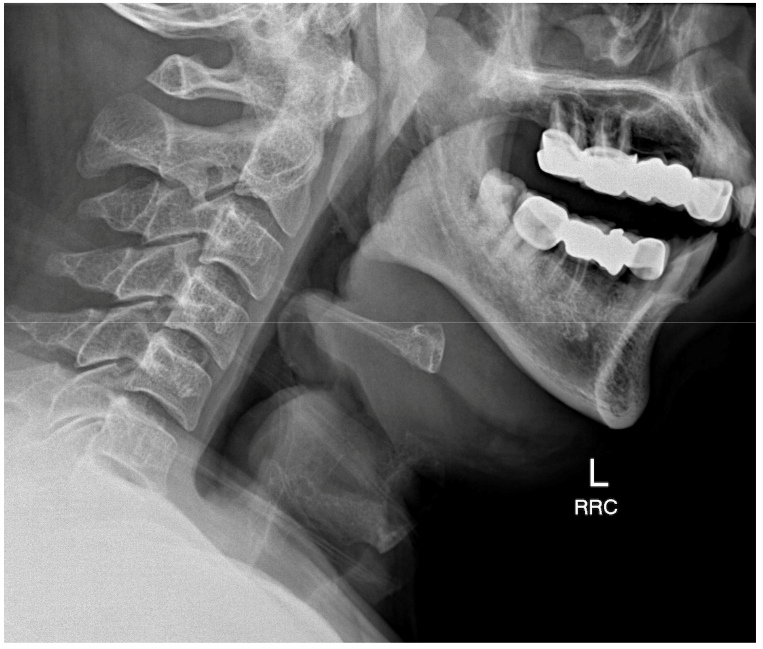
ResponseAcute epiglottitis
Thickening of epiglottis (thumb printing sign)
Loss of cervical spine lordosis
Normal prevertebral soft tissues paces
No visible FB
Thickening of epiglottis (thumb printing sign)
Loss of cervical spine lordosis
Normal prevertebral soft tissues paces
No visible FB
PromptOrganisims causing epiglotitis
ResponseHaemophilus influenzae B (HiB)
Haemophilus parainfluenzae
Strep pneumoniae (most common now vaccinations for HiB)
Group A strep (pyogenes)
S. Aureus
Atypical (Mycoplasma)
Haemophilus parainfluenzae
Strep pneumoniae (most common now vaccinations for HiB)
Group A strep (pyogenes)
S. Aureus
Atypical (Mycoplasma)
PromptManagement of epiglottitis
ResponseNurse in position of best comfort, avoid distressing child
Call for urgent assistance from anaesthetics/ENT
Prepare to manage airway obstruction (Difficult airway equipment including cric kit. Aim to intubate in OT with awake intubation unless acute deterioration)
Analgesia - IV paracetamol 1g, morphine 0.1g/kg titrated to analgesia but not drowsiness
Antibiotics
eTG May ‘24
Call for urgent assistance from anaesthetics/ENT
Prepare to manage airway obstruction (Difficult airway equipment including cric kit. Aim to intubate in OT with awake intubation unless acute deterioration)
Analgesia - IV paracetamol 1g, morphine 0.1g/kg titrated to analgesia but not drowsiness
Antibiotics
- Ceftriaxone 50mg/kg to 2g (RCH + etG)
- Moxifloxacin 400 mg IV if penicillin allergy
eTG May ‘24
PromptEpiglotitis intubation
ResponseIf time and resources allow - awake fibreoptic in theatre with ENT backup
Positioning - unable to lie flat - preoxygenate in upright position
Laryngoscopy - large epiglottis likely to distort view - use of straight (miller) blade, hypercurved blade may improve view
Tube delivery - Laryngeal inlet may be narrowed or soiled with pus - use of narrow bore ETT or bougie
Failed airway plan - unlikely to be able to ventilate through LMA - have equipment and landmarks ready for surgical cricothyroidotomy
Positioning - unable to lie flat - preoxygenate in upright position
Laryngoscopy - large epiglottis likely to distort view - use of straight (miller) blade, hypercurved blade may improve view
Tube delivery - Laryngeal inlet may be narrowed or soiled with pus - use of narrow bore ETT or bougie
Failed airway plan - unlikely to be able to ventilate through LMA - have equipment and landmarks ready for surgical cricothyroidotomy