RESPIRATORY
EFUSION
Prompt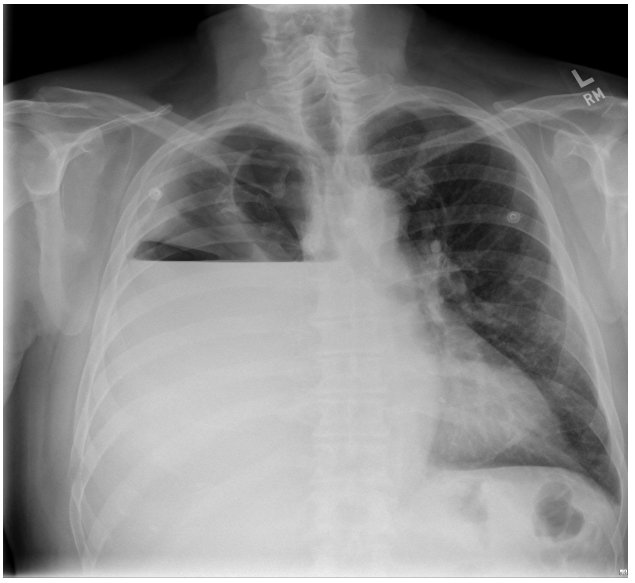
ResponseLarge pleural effusion + pneumothorax = hydropneumothorax
Tracheal deviation to left - radiologic signs of tension
No surgical emphysema
No oxygen tubing
No mass/infection seen
No bony lesions
Tracheal deviation to left - radiologic signs of tension
No surgical emphysema
No oxygen tubing
No mass/infection seen
No bony lesions
Prompt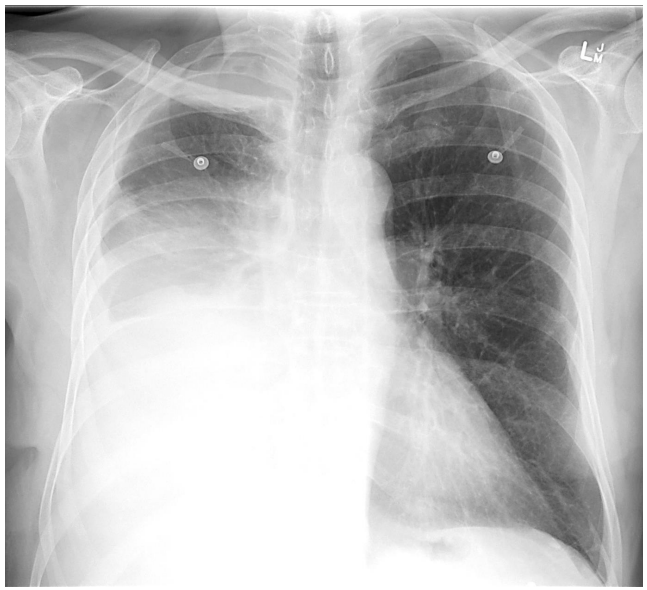
ResponseHomogenous opacification right middle and lower zones
Loss of right hemidoaphragm
Rim of opacity around periphery of pleural cavity consistent with fluid
DDx
Parapneumonic effusion
Malignancy
PE
Hydrothorax from massive ascites
Loss of right hemidoaphragm
Rim of opacity around periphery of pleural cavity consistent with fluid
DDx
Parapneumonic effusion
Malignancy
PE
Hydrothorax from massive ascites
Prompt30 M from Nepal with Fever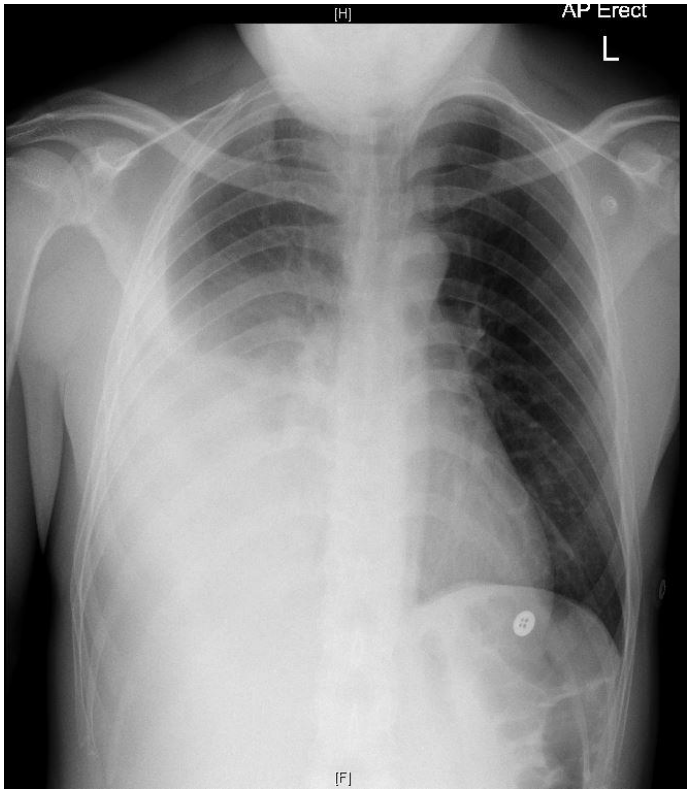
ResponseThere was no description of this. But you aspirate it.
PromptUS RLL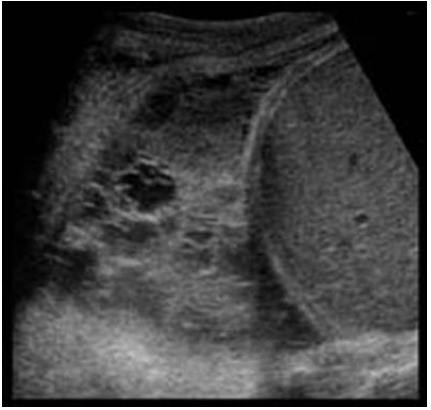
ResponseEffusion
Loculated
Consolidated lung
Dx = Empyema
Loculated
Consolidated lung
Dx = Empyema
PromptInvestigations in Pleural Effusion
ResponsePleural fluid culture - identify organisms and target antibiotic therapy
Pleural fluid biochemistry - LDH, Protein - Transudate vs exudate (lights criteria). Glucose, pH
Pleural fluid cytology - identify malignancy
Pleural fluid AFB ? TB
Serum protein + LDH for comparison (Light’s criteria)
CT - look for malignancy (Especially after fluid is drained)
CTPA - Diagnose PE
Pleural fluid biochemistry - LDH, Protein - Transudate vs exudate (lights criteria). Glucose, pH
Pleural fluid cytology - identify malignancy
Pleural fluid AFB ? TB
Serum protein + LDH for comparison (Light’s criteria)
CT - look for malignancy (Especially after fluid is drained)
CTPA - Diagnose PE
PromptTransudate vs Exudate investigations
ResponseUse Lights criteria - you will need to order
Pleural fluid and serum LDH
Pleural fluid and serum Cholesterol
Pleural fluid and serum Albumin
Pleural fluid and serum LDH
Pleural fluid and serum Cholesterol
Pleural fluid and serum Albumin
PromptWhat is lights criteria
ResponseExudate if 1 or more of
Pleural fluid protein:serum protein >0.5
Pleural fluid LDH:Serum LDH >0.6
Pleural fluid LDH > ⅔ upper value of serum LDH (Lab reference range
If equivocal
Serum albumin - pleural fluid albuman <1.2g/dL
Pleural fluid albumin >30g/L
Pleural fluid protein:serum protein >0.5
Pleural fluid LDH:Serum LDH >0.6
Pleural fluid LDH > ⅔ upper value of serum LDH (Lab reference range
If equivocal
Serum albumin - pleural fluid albuman <1.2g/dL
Pleural fluid albumin >30g/L
PromptCauses of pleural exudate
ResponseInfective - pneumonia, TB
Inflammatory - Rheumatoid arthritis, SLE, Dressler’s syndrome
Malignancy
PE (Pulmonary infarction from PE)
Benign asbestos related
Abdominal - pancreatitis, intraabdominal abscess, esophageal perforation, ascites
Inflammatory - Rheumatoid arthritis, SLE, Dressler’s syndrome
Malignancy
PE (Pulmonary infarction from PE)
Benign asbestos related
Abdominal - pancreatitis, intraabdominal abscess, esophageal perforation, ascites
PromptCauses of pleural transuadate
ResponseCCF
Cirrhosis
Hypoalbuminaemia
Hypothyroid
Nephrotic syndrome
Cirrhosis
Hypoalbuminaemia
Hypothyroid
Nephrotic syndrome
PromptIndications for thoracentesis of pleural effusion in ED
ResponseRespiratory compromise
Haemodynamic instability
Massive effusion with mediastinal shift
Some stable but symptomatic patients.
Haemodynamic instability
Massive effusion with mediastinal shift
Some stable but symptomatic patients.
PromptManagement of massive effusion
ResponseIdentify and establish goals of care
Improve oxygenation - O2 via NRBM
Decompression + Formal ICC insertion
Improve oxygenation - O2 via NRBM
Decompression + Formal ICC insertion
PromptPleural fluid findings suggestive of empyema
ResponsePurulent pleural fluid
Positive gram stain/culture
WCC >50,000
Pleural fluid glucose <3
Pleural fluid pH <7.2
Pleural fluid LDH >1000
Positive gram stain/culture
WCC >50,000
Pleural fluid glucose <3
Pleural fluid pH <7.2
Pleural fluid LDH >1000
PromptManagement of Empyema
ResponseSupportive
- Supplemental O2
- Analgesia
- Fluids/nutrition
- IVABx - broad spectrum (Tazocin/cefepime, Add vancomycin if MRSA suspected)
- Large bore chest drain ~20 F
- Fibrinolytics via chest drain
- VATS (Video assisted thoracoscopic surgery
- Open thoracotomy
PromptRisk factors for re-expansion pulmonary oedema after thoracocentesis
ResponseAge <30
Lung collapse >7 days
>3L pleural fluid
Use of suction
Rapid drainage >1.5L/hr
Lung collapse >7 days
>3L pleural fluid
Use of suction
Rapid drainage >1.5L/hr