CARDIOLOGY
TAMPONADE
PromptAssessment and history
Response
PromptECG findings in Tamponade
ResponseLow voltage (Can be cause by anything that gets in the way – Fat, fluid, air)
Tachycardia
Electrical alternans
Tachycardia
Electrical alternans
PromptDifferential diagnosis of ECG findings above
Response“Low Power/Weak Battery”
Infiltrative diseases (Amyloid, Sarcoid, etc.)
End stage cardiomyopathy
Myxedema (severe hypothyroidism)
Conduction blockage
Fluid/Effusion (pericardial or pleural)
Fat (obesity)
Air (COPD, PTx)
Infiltrative diseases (Amyloid, Sarcoid, etc.)
End stage cardiomyopathy
Myxedema (severe hypothyroidism)
Conduction blockage
Fluid/Effusion (pericardial or pleural)
Fat (obesity)
Air (COPD, PTx)
PromptEcho findings
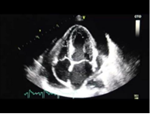
ResponsePericardial effusion >1.5cm
Diastolic RV collapse (Late diastolic collapse of RV free wall)
Systolic RA collapse (Early systolic collapse of RA free wall)
Abnormal septal motion due to reciprocal ventricular filling
Dilated IVC with no respiratory collapse (“Plethoric IVC)
Diastolic flow reversal in hepatic veins
Exaggerated MV/TV inflow velocity variation with resp cycle (surrogate for pulsus paradoxus)
Diastolic RV collapse (Late diastolic collapse of RV free wall)
Systolic RA collapse (Early systolic collapse of RA free wall)
Abnormal septal motion due to reciprocal ventricular filling
Dilated IVC with no respiratory collapse (“Plethoric IVC)
Diastolic flow reversal in hepatic veins
Exaggerated MV/TV inflow velocity variation with resp cycle (surrogate for pulsus paradoxus)
PromptCauses of effusions
ResponseInfectious pathogen (viral, bacterial, HIV)
Neoplastic
Renal failure
CCF
Aortic dissection
AMI +/- free wall rupture
Myxoedema
SLE
Rheumatoid arthritis
Neoplastic
Renal failure
CCF
Aortic dissection
AMI +/- free wall rupture
Myxoedema
SLE
Rheumatoid arthritis
PromptDDx Chest pain and dyspnoea
ResponseSee pericarditis
PromptPericardiocentesis - how to
ResponsePositioning of the patient for procedure – sat up 45 deg
Gauge of needle used - 14-18 ga
Insertion point of needle - Between left xiphoid and costal margin
Direction of needle advancement - Left shoulder or right clavicle (2 Techniques) Or accept ‘Ultrasound guided’
Gauge of needle used - 14-18 ga
Insertion point of needle - Between left xiphoid and costal margin
Direction of needle advancement - Left shoulder or right clavicle (2 Techniques) Or accept ‘Ultrasound guided’
PromptInvestigation of acute deterioration in chest pain
ResponseCXR Alt DX- LRTI, PTx, cardiac size and shape
ECG Ischaemia, arrythmia
ABG Gas exchange, metabolic status, Hb, creat for contrast Ix, bsl
Bedside ECHO Fluid status, RWMA, Dx- PE/dissection
Lung USS PTx
ECG Ischaemia, arrythmia
ABG Gas exchange, metabolic status, Hb, creat for contrast Ix, bsl
Bedside ECHO Fluid status, RWMA, Dx- PE/dissection
Lung USS PTx
PromptECG - Interpret (electrical alternans, low voltage)
Response
PromptDisposition
Responsedisposition according to haemodynamic situation and Pericardial effusion scoring index based on :
- Echocardiographic assessment of haemodynamics
- effusion Size on echo
- aetiology of effusion (not all relevant in this case)
- infective - viral most common (coxsakie,CMV,Echo,HIV) - other: bacterial/ fungal /TB
- Uremia
- Autoimmune (SLE,RA,..)
- Malignancy
- Less relevant here but to consider:
- MI
- Trauma
- ?will need pericardiocentesis
PromptManagnement of unresponsive patient with presumed pericardial tamponade
ResponseCommence CPR 30:2
Adrenaline 1mg
100% O2 via BVM
IV Fluid load 10ml/kg 0.9% NS
Pericardiocentesis with USS-guided needle drainage/ insertion of drain over wire
Cardiology attendance for formalisation of drain
Adrenaline 1mg
100% O2 via BVM
IV Fluid load 10ml/kg 0.9% NS
Pericardiocentesis with USS-guided needle drainage/ insertion of drain over wire
Cardiology attendance for formalisation of drain
Pulsus paridoxus
Pericardial friction rub